1.Brief knowing about magnetic particle clutch
A magnetic particle clutch is a torque‑control device that provides infinitely variable torque transmission proportional to the excitation current applied to its electromagnetic coil. Unlike friction clutches, it does not rely on mechanical pressure plates or friction linings. Instead, it uses the shear resistance of magnetically aligned particles to transfer torque smoothly, even under continuous slip conditions.In industrial applications, a magnetic particle clutch is defined as a precision tension‑control actuator used in web handling , unwinding/rewinding stands, and test dynamometers.
2.Main components of magnetic particle clutch
1.Input Rotor/Drive Cylinder (Input member): Typically the outer rotating member connected to the power source (motor), designed for heat dissipation.
2.Output Rotor/Shaft (Output member): Rotates within the input rotor and is connected to the load.
3.Excitation Coil (Coil): A stationary ring coil within the housing that produces a magnetic field when DC current is applied, allowing for torque control.
4.Magnetic Powder (Ferro/Chrome powder): Fine magnetic particles filling the air gap between the input and output rotors, forming chains to transmit torque when magnetized.
5.Stator/Housing (Stators): The outer assembly that houses the coil and components, holding the magnetic field structure.
6.Bearings & Seals: Bearings allow the input and output members to rotate freely, while seals contain the powder.
3.The importance of magnetic particle clutch
1.Good Tension Control Without Breaking A Sweat:Imagine unwinding a roll of thin film or copper wire. If the tension varies even a little, the material stretches or tears. A magnetic particle clutch lets you dial in the exact torque you need – and it holds that torque steady as the roll diameter changes.
2.Sliping Without Wearing Out:Most clutches hate slipping. Friction plates overheat and wear down in minutes. But a magnetic particle clutch is designed to slip continuously. The magnetic powder takes the abuse, not solid surfaces.
3.Precision torque control:Torque is almost perfectly linear with current. Turn the knob a little, torque goes up a little. No guesswork, no weird jumps. You can build a closed‑loop tension system with a cheap controller and a load cell.
4.Soft Starts Feel Effortless:Starting a heavy flywheel or a long conveyor with a regular clutch gives you a violent jerk. The magnetic particle clutch ramps up torque smoothly. Your machine components last longer, and your operators don’t get thrown off balance.
5.Keeping Running In Dirty:Friction clutches choke on dust and oil. The magnetic particle clutch is sealed. The powder stays inside, the dirt stays outside. You’ll find them on printing presses, paper mills, and textile lines – places where ordinary clutches die young.
6.Fast Responds:Apply current, and torque builds in milliseconds. Cut the current, and it releases almost instantly. That kind of speed lets you do precise tension control on high‑speed packaging lines. The clutch keeps up with the machine, not the other way around.
7.No Speed Limitation:Some clutches only work when there’s a speed difference. Others need full speed to engage properly. The magnetic particle clutch delivers the same torque at zero RPM as it does at full speed.
8.Save Cost:Magnetic particle clutch costs more upfront than a simple friction clutch. But it lasts years longer, needs less maintenance, and doesn’t eat up replacement plates and linings. Add up the downtime and parts, and the magnetic clutch pays for itself.
4.Common faults of magnetic particle clutch
1.Insufficient Torque or Slipping:One of the most common faults is a reduction in transmitted torque. In this condition, the clutch may slip under load or fail to deliver the required holding force. This problem is often caused by deterioration of the magnetic powder, insufficient excitation current, overheating, or excessive internal wear.
2.Failure to Engage:A magnetic particle clutch may sometimes fail to engage when power is applied. This usually indicates an electrical problem, such as a damaged coil, broken wiring, poor terminal contact, or a malfunction in the power supply or controller. When engagement does not occur, the clutch cannot transmit torque, which may interrupt normal equipment operation.
3.Excessive Residual Drag:Even when the clutch is in the disengaged state, some units may continue to produce abnormal drag torque. This issue is commonly associated with residual magnetism, contaminated or agglomerated magnetic particles, internal wear, or mechanical misalignment.
4.Overheating:Overheating is a serious and frequent fault in magnetic particle clutches. It may result from prolonged slipping, excessive current, poor ventilation, or operation beyond the rated load. High temperature not only reduces clutch performance but may also accelerate the aging of the magnetic powder, insulation materials, bearings, and seals.
5.Abnormal Noise During Operation:Unusual noise is often a sign of internal mechanical problems. Bearing wear, loose mounting components, rotor-stator friction, or damaged internal parts may all generate abnormal sounds.
6.Slow Response or Delayed Action:A magnetic particle clutch is expected to respond promptly to changes in input current. If the response becomes slow, the problem may be related to aging magnetic powder, weakened magnetic performance, controller faults, or excessive heat buildup.
7.Coil Burnout or Electrical Failure:The excitation coil is one of the key components of the clutch. If it is exposed to overvoltage, overcurrent, poor heat dissipation, or insulation breakdown, it may burn out or fail electrically.
8.Magnetic Powder Leakage:Leakage of magnetic powder is another important fault that should not be overlooked. It is generally caused by seal failure, aging components, overheating, or mechanical shock. Once powder leakage occurs, the clutch torque will decrease, and internal contamination may further damage adjacent parts.

Joliet 發表在 痞客邦 留言(0) 人氣()


1.Core understanding of CNC motion controller
At its essence, a CNC motion controller is a specialized electronic system designed to govern the motion of CNC machines by interpreting digital programming instructions and converting them into precise electrical signals that drive motors, spindles, and other mechanical components. It serves as the central hub between the machine’s hardware and the operator’s programming, ensuring that every cut, drill, or movement is executed with micron-level accuracy.
DDCS V4.1
2.Working steps of CNC motion controller
1.Programming Input: The process begins with the operator inputting a machining program into the controller. This program, typically written in G-code or M-code, defines the toolpath, feed rate, spindle speed, and other critical parameters.
2.Program Interpretation and Decoding: Once the program is loaded, the controller’s software interprets the code line by line, decoding each command into actionable instructions.
3.Data Processing and Interpolation: This is one of the most critical steps in the workflow. The controller processes the decoded instructions to generate smooth, precise toolpaths.
4.Signal Generation and Transmission: After processing the program and calculating the toolpath, the controller generates electrical control signals that are sent to the machine’s servo or stepper motors.
5.Motion Execution and Real-Time Feedback: As the motors receive the control signals, they drive the CNC machine’s axes and tooling to execute the machining operations.
6.Post-Processing and Error Handling: Once the machining program is complete, the controller stops the motors and spindle, and resets the machine to its home position. It also logs key data for quality control and maintenance purposes.
3.Main functions of CNC motion controller
1.Motion Control and Coordination: The primary function of the CNC motion controller is to manage the motion of the machine’s axes, ensuring precise positioning, speed control, and multi-axis synchronization. This includes controlling linear motion and rotary motion, as well as coordinating multiple axes to execute complex toolpaths.
2.Program Management and Editing: CNC motion controllers feature built-in program management tools that allow operators to load, edit, store, and recall machining programs. This includes capabilities like program editing, program simulation, and program storage.
3.Error Detection and Safety Protection: Safety is a top priority in CNC machining, and modern motion controllers are equipped with robust error detection and safety features to protect the machine, operator, and workpiece. These features include overtravel protection, overload protection, tool breakage detection, and collision avoidance.
4.Feed Rate and Spindle Speed Control: The controller precisely adjusts the feed rate and spindle speed to optimize machining performance. It automatically adjusts these parameters based on the material being machined, the tool type, and the desired surface finish.
5.Tool Management and Compensation: CNC motion controllers include tool management systems that track tool parameters and enable tool compensation. Tool length compensation adjusts the tool’s position to account for differences in tool length, ensuring accurate depth cuts.
6.Data Monitoring and Integration: Modern CNC motion controllers are equipped with data monitoring and communication capabilities, allowing them to integrate with factory automation systems and provide real-time data on machining performance. This includes monitoring key metrics like machining time, tool wear, error rates, and production volume, which can be used for quality control, maintenance scheduling, and process optimization.
4.Suitable application fields of CNC motion controller
1.Aerospace and Defense Manufacturing: The aerospace industry demands the highest levels of precision and reliability, and CNC motion controllers are essential for machining critical components like turbine blades, aircraft frames, and engine parts. These components often have complex curved surfaces and tight tolerances, requiring multi-axis motion controllers that can synchronize 5 or more axes with exceptional accuracy.
2.Automotive Manufacturing: In automotive production, CNC motion controllers are used for mass-producing engine components, transmission parts, body panels, and braking systems. They enable high-speed, high-volume machining with consistent precision, ensuring that every part meets the same specifications.
3.Medical Device Manufacturing: Medical devices—such as surgical instruments, orthopedic implants, and dental prosthetics—require extreme precision and biocompatibility. CNC motion controllers are used to machine these components from materials like titanium, stainless steel, and biocompatible plastics, ensuring they meet strict medical standards.
4.Mold and Die Manufacturing: Mold and die making involves machining complex, intricate shapes that require high precision and surface quality. CNC motion controllers enable the machining of these complex toolpaths, including 3D contouring and deep cavity machining.
5.Electronics and Semiconductor Manufacturing: The electronics industry relies on CNC motion controllers for machining components like printed circuit boards (PCBs), semiconductor wafers, and electronic enclosures. These components are small, delicate, and require micron-level precision, making CNC motion controllers ideal for their production.
6.Hobbyist and Educational Settings:Compact, affordable controllers are used in desktop CNC machines, 3D printers, and laser engravers, allowing hobbyists to create custom parts, art, and prototypes. In educational settings, controllers are used to teach students about CNC machining, programming, and automation, preparing them for careers in manufacturing and engineering.
7.Other Key Industries: Beyond the above fields, CNC motion controllers are also used in marine manufacturing, energy production, and jewelry manufacturing.

Joliet 發表在 痞客邦 留言(0) 人氣()


A speed torque graph describes how available output torque changes as motor shaft speed changes while a stepper motor is driven. The horizontal axis represents shaft speed, and the vertical axis represents torque. Curves on the graph vary with motor design, current setting, excitation or microstepping mode, driver type, supply voltage, and test conditions.

1) Holding torque (rated current, zero speed)
Holding torque is the torque present at the motor shaft when rated current is applied and the shaft is not rotating. It is a static value measured at zero speed. If a gearbox is used, the usable torque at the output is limited by the mechanical rating of the gearbox components.

2) Pull-in curve (start/stop region boundary)
The pull-in curve marks the boundary of the start/stop region. Within this region, the motor can start from rest or stop to rest at the commanded step rate under the stated load condition without a speed ramp. Outside this region, a speed ramp is typically used to reduce the risk of losing step synchronization.

3) Pull-out torque curve (running boundary at speed)
The pull-out torque curve indicates the load-torque boundary the motor can sustain while running at a given speed under stated drive conditions. If the required running torque exceeds this boundary at an operating speed, the motor can lose synchronism in an open-loop system.

4) Starting frequency limit (no ramp, stated load condition)
Starting frequency limit is the step pulse rate boundary at which the motor can start or stop without an acceleration or deceleration profile under a stated condition. When external friction load and inertial load are reduced, this boundary shifts. As inertial load increases, the start/stop boundary shifts to a lower pulse rate.

5) Slew-rate limit (no-load operating boundary)
Slew-rate limit is the step pulse rate boundary observed under a stated no-load condition. This boundary depends on driver method, supply voltage, winding inductance, and excitation mode. No-load conditions do not represent limits under applied load.

Documentation notes
Curve values are read together with the stated test conditions, including driver type, supply voltage, current setting, excitation mode, and measurement method.
System torque and speed boundaries depend on load inertia, friction, transmission ratio, and the motion profile used by the controller.
Source:https://www.oyostepper.com/article-1110-Torque-vs-Speed-Characteristics-of-Stepper-Motor.html

Joliet 發表在 痞客邦 留言(0) 人氣()

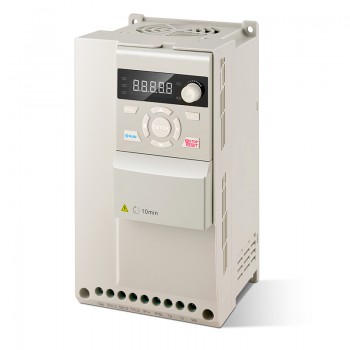
H100系列VFD变频器 5HP 4.0KW 10.5A 三相380V VFD变频器
1.Basic definitionn of variable frequency drive
A variable frequency drive, also known as a variable speed drive (VSD) or AC drive, is an electronic device that regulates the speed and performance of an electric motor by adjusting the frequency and voltage of the power supplied to it. VFDs are used in a wide range of applications, from small appliances to large industrial machinery, to improve energy efficiency, enhance control, and provide smooth motor operation. 

Joliet 發表在 痞客邦 留言(0) 人氣()

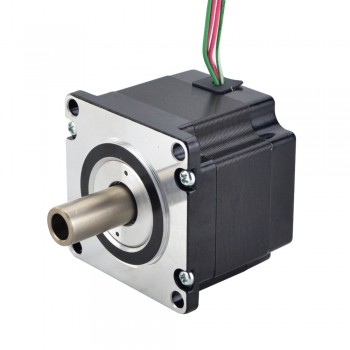
Nema 23 空心轴步进电机双极 1.8 度 0.78 Nm(110.5 盎司英寸)2.0A 双轴
1. Basic concepts of hollow shaft stepper motors
Hollow shaft stepper motors are an open-loop control motor that converts electrical pulse signals into angular displacement or linear displacement. They are a special type of stepper motor structure. In the case of non-overload, the motor speed and stop position depend only on the frequency and number of pulses of the pulse signal, and are not affected by load changes.

Joliet 發表在 痞客邦 留言(0) 人氣()

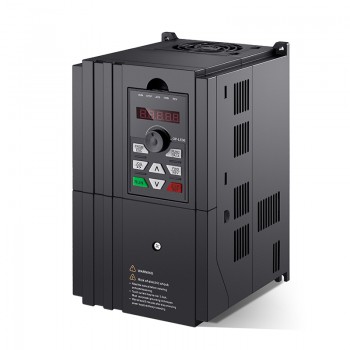
BD600系列VFD变频驱动器7.5HP 5.5KW 23A三相220V用于主轴电机速度控制
1. Definition of variable frequency drives
Variable-frequency drives (VFD) are power control devices that use variable frequency technology and microelectronics technology to control the speed and power of AC motors by changing the frequency of the motor's working power supply. Its main function is to achieve precise control of the motor's speed by adjusting the power supply frequency and voltage supplied to the motor, thereby achieving energy saving, speed regulation and improving equipment performance.

Joliet 發表在 痞客邦 留言(0) 人氣()

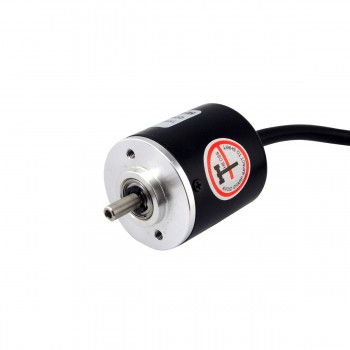
200 CPR增量式步进电机旋转编码器AB型双通道4mm实心轴ISC3004
1. Basic definition and function of stepper motor encoders
Stepper motor encoders are sensors attached to stepper motors, mainly used to monitor the mechanical angle or linear displacement of the motor in real time, and convert it into electronic signals to feed back to the control system (such as PLC). This feedback mechanism can make up for the shortcomings of stepper motor open-loop control, solve problems such as step loss and step loss, and improve positioning accuracy and dynamic response performance.

Joliet 發表在 痞客邦 留言(0) 人氣()

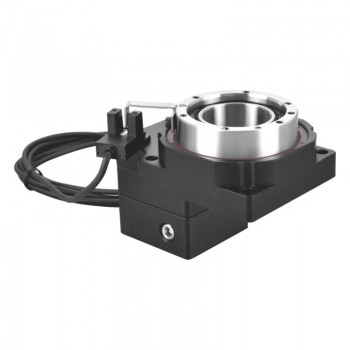
10:1 空心旋转平台旋转齿轮箱,适用于 57 毫米 Nema 23 步进电机/伺服电机
1. Working principle of hollow rotary actuators
The working principle of hollow rotary actuators involves drive and transmission mechanisms. Taking motor-gear transmission as an example, the motor starts to rotate after power is turned on, and the power is transmitted to the small gear through the coupling. The small gear meshes with the large gear to achieve speed conversion, thereby driving the turntable to rotate at the set speed. The principle of hydraulic or pneumatic drive is similar, and the rotational motion is achieved through a hydraulic cylinder or a cylinder.

Joliet 發表在 痞客邦 留言(0) 人氣()

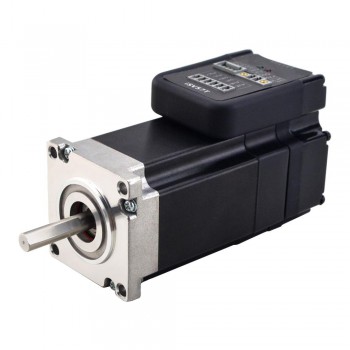
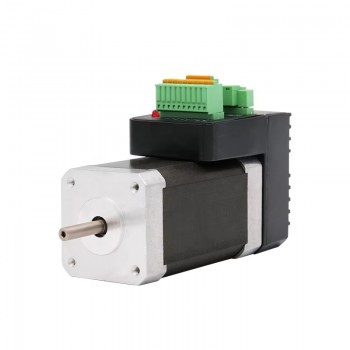
NEMA 23 集成简易伺服电机无刷直流伺服电机 130w 3000rpm 0.45Nm(63.73oz.in) 20-50VDC
1. A brief introduction to integrated servo motors
An integrated servo motor is a servo system that highly integrates motors, encoders, and drivers. Compared with traditional distributed servo motors, integrated servo motors reduce the number of cable connections, greatly reducing the size of the entire servo system and making it easier to install in equipment, especially those with limited internal space.

Joliet 發表在 痞客邦 留言(0) 人氣()

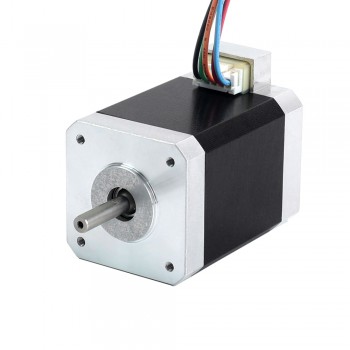
Nema 17 步进电机 5 相 0.5Nm 0.72 度 1.8A 42x42x60mm 5 线
1. What is a five-phase stepper motor?
A five-phase stepper motor is a special stepper motor whose operating principle is based on electromagnetism. It achieves precise control of the rotation angle by gradually changing the relative position between the stator and the rotor. The five-phase stepper motor has five different phases, each of which can generate a specific electromagnetic field to drive the rotor to rotate at a predetermined step angle. This design enables the five-phase stepper motor to achieve very high rotation accuracy and stability.

Joliet 發表在 痞客邦 留言(0) 人氣()

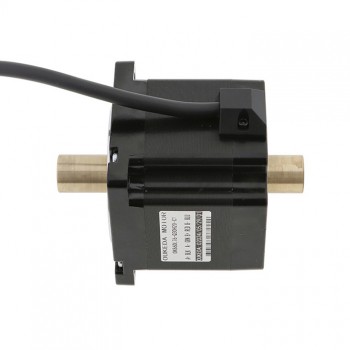
Oukeda Hollow Shaft Nema 34 Stepper Motor Bipolar 1.8 Deg 4.5 Nm 6.0A 2.1V Dual Shaft 4 Wires
‌1.A brief introduction to hollow shaft stepper motors
Hollow shaft stepper motors are a specially designed stepper motor whose core feature is that they have one or more hollow shafts. These hollow shafts not only allow other parts of the motor to pass through, but also integrate additional functions as needed, such as heat dissipation and connection to other devices. The definition and application scenarios of hollow shaft stepper motors make them perform well in situations where precise positioning and synchronous control are required, such as automated production lines, robot arms, and medical devices.

Joliet 發表在 痞客邦 留言(0) 人氣()

JMC Nema 17 集成交流伺服电机 78W 24V 0.185Nm(26.19 盎司英寸)52000RPM 42 x 42mm
1.Simple definition of integrated servo motors
Integrated servo motors are devices that integrate motors and servo controllers. It combines the traditional separate structures of motors and servo controllers into one, greatly simplifying the system design and installation process. Integrated servo motors are widely used in the field of industrial automation and have the advantages of small size, high power density, and fast response speed.

Joliet 發表在 痞客邦 留言(0) 人氣()

1 2
Blog Stats
⚠️

成人內容提醒

本部落格內容僅限年滿十八歲者瀏覽。
若您未滿十八歲,請立即離開。

已滿十八歲者,亦請勿將內容提供給未成年人士。